
The Data Center Market is undergoing a significant transformation, where uninterrupted power is no longer just a safety measure but a critical operational necessity. As data centers scale to meet the growing demands of cloud services, AI workloads, and edge computing, reliable battery systems have become central to ensuring resilience, energy efficiency, and sustainability. Today, batteries are no longer merely backup components—they are strategic assets that can define the operational performance of a facility.
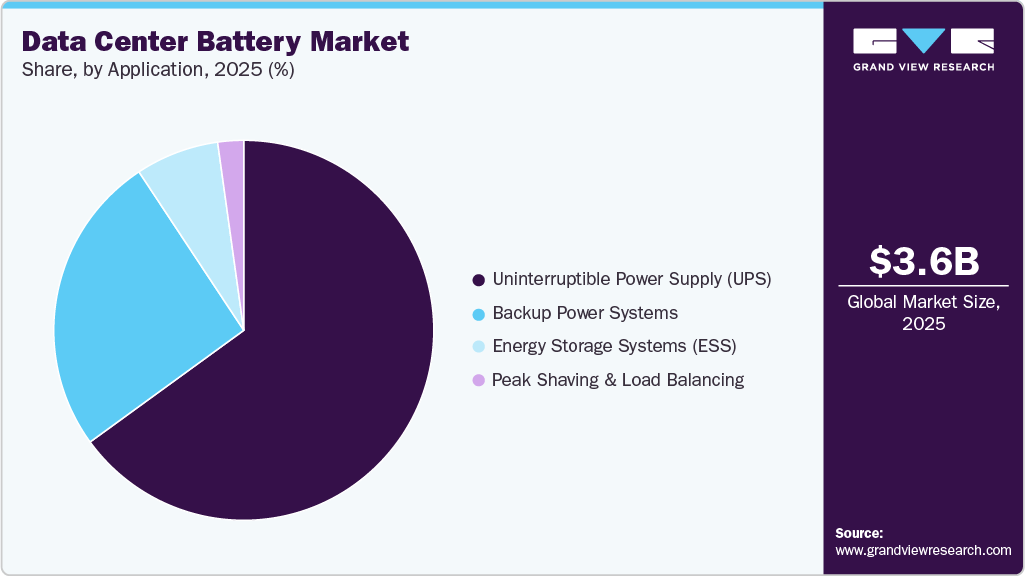
The global data center battery market, estimated at USD 3.59 billion in 2025, is forecast to grow to USD 6.10 billion by 2033 at a CAGR of 6.9% over the 2026–2033 period. Key factors behind this growth include the swift development of hyperscale data centers, increasing cloud service adoption, and rising demands for reliable, continuous power to support mission-critical workloads. This trajectory underscores that the industry is moving toward smarter, more resilient, and future-ready power solutions.
Transitioning to Advanced Battery Technologies
Traditional lead-acid batteries, once the backbone of data center power infrastructure, are gradually being replaced by more advanced solutions. Although reliable, these systems have limitations in energy density, lifecycle performance, and maintenance, making them less suitable for modern, high-density data center environments.
Lithium-ion batteries are rapidly emerging as the preferred solution for new deployments. Their higher energy density, faster recharge rates, and lower maintenance requirements translate into smaller footprints and reduced operational costs, advantages that are especially valuable for hyperscale and edge facilities. In parallel, emerging technologies such as solid-state batteries, flow batteries, and other long-duration storage options are beginning to gain attention. These alternatives promise enhanced safety, longer lifecycles, and improved environmental impact, appealing to operators seeking to optimize both performance and sustainability.
Another key trend is the adoption of intelligent Battery Management Systems. These systems transform batteries from passive backup devices into proactive assets. With real-time monitoring, predictive analytics, and automated alerts, modern BMS platforms help prevent downtime, extend battery life, and optimize operational efficiency. When paired with AI-driven analytics, operators can anticipate capacity needs, detect early signs of degradation, and adjust power allocation dynamically, allowing data centers to run more reliably and efficiently.
Hybrid and Modular Solutions for Modern Data Centers
Hybrid power architectures are becoming a cornerstone of data center design. By integrating battery systems with renewable energy sources such as solar and wind, data centers can reduce dependence on diesel generators and grid power. This approach enhances resilience while simultaneously improving environmental performance, helping organizations meet sustainability objectives without compromising uptime.
Edge computing has further influenced battery deployment strategies. Smaller, distributed edge sites face tighter constraints for space, power, and cooling, yet they still need to maintain uninterrupted service. Modular, high-density battery systems address these challenges by allowing operators to expand capacity as demand grows. This scalability ensures that facilities can balance efficiency, cost, and reliability effectively.
Despite technological progress, challenges remain. Supply chain pressures for critical battery materials like lithium and cobalt can impact availability and cost. Forward-looking operators are exploring alternative chemistries and diversified sourcing strategies to mitigate these risks. Additionally, while the initial investment in advanced battery systems can be significant, the focus on lifecycle value and operational benefits often justifies the upfront costs.
Redefining Reliability and Efficiency
The Data Center Market is increasingly recognizing that battery systems are central to operational strategy. From lithium-ion adoption to AI-managed BMS platforms and hybrid renewable integrations, batteries are no longer auxiliary components—they are vital to achieving uninterrupted service and energy efficiency.
As the demand for continuous operations grows alongside sustainability requirements, data centers that embrace next-generation battery technologies gain a strategic advantage. These solutions protect mission-critical workloads, optimize power management, and provide the flexibility needed to adapt to evolving operational demands.
In conclusion, the evolution of the Data Center Market is closely tied to advancements in battery technology. Intelligent, modular, and renewable-integrated battery solutions are redefining reliability, efficiency, and sustainability. Data centers that invest strategically in these technologies are positioning themselves for long-term success in a landscape where operational continuity and energy performance are no longer optional but essential.