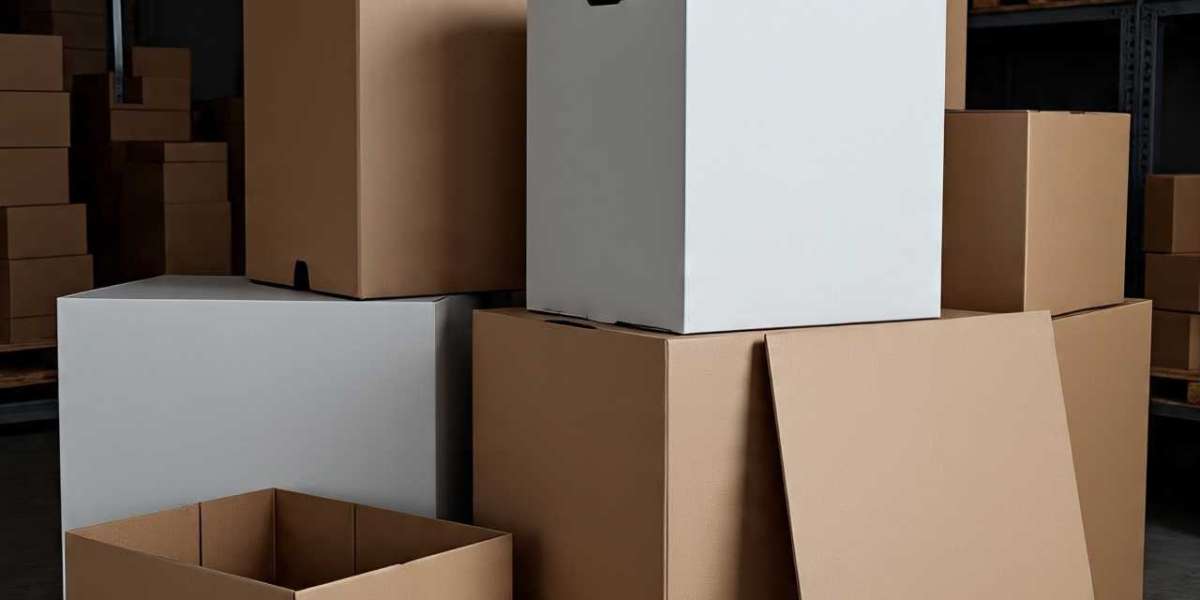

When products need to traverse across town or around the world, corrugated containers provide the protective foundation that modern commerce depends upon. This engineered packaging solution combines surprising strength with light weight, protects contents from impact and compression, and accommodates nearly infinite customization possibilities.
The Engineering Behind Corrugated Construction
Corrugated material's distinctive strength comes from its multi-layer architecture. Unlike single-layer paperboard, corrugated combines flat linerboard sheets with a fluted medium layer, creating an arch-supported structure that resists compression far beyond what its weight suggests possible.
The Flute: The wavy, corrugated middle layer provides the structural backbone. When positioned vertically between flat liners, these arches create rigid columns that distribute compression forces. The flute also provides cushioning that absorbs impacts and creates an insulating air space that moderates temperature transfer.
The Linerboard: Flat outer layers provide smooth surfaces for printing and handling while enclosing and protecting the fluted medium. Linerboard can be manufactured from virgin kraft paper for maximum strength or recycled fibers for economy and sustainability. Some applications use different liner grades on inner and outer surfaces—stronger exterior liner for protection, lighter interior liner for economy.
The Adhesive: Starch-based adhesives bond liners to flute tips, creating the unified composite structure. These adhesives must maintain strength across temperature variations, humidity changes, and extended timeframes while remaining safe for food contact and recycling processes.
This layered construction creates remarkable strength-to-weight ratios. A corrugated container weighing just a few ounces can safely contain and protect dozens of pounds of product during shipping and storage.
Flute Profiles and Their Applications
Different flute sizes optimize performance characteristics for specific applications. Understanding these profiles helps match packaging specifications to actual requirements.
A-Flute: The largest standard profile at approximately 1/4 inch thickness provides maximum cushioning and stacking strength. Its large arches create excellent shock absorption, making A-flute ideal for fragile products. However, its thickness consumes more storage space and provides a less smooth printing surface than smaller flutes. Applications include fragile items, products requiring significant cushioning, and containers needing excellent stacking strength.
B-Flute: At approximately 1/8 inch thickness, B-flute offers good compression strength with a smoother surface that improves print quality. Its moderate cushioning properties suit many general-purpose applications. The thinner profile reduces storage space compared to A-flute while maintaining adequate protective properties for most products. Common in die-cut boxes, pad wraps, and retail packaging.
C-Flute: The most common corrugated profile balances cushioning, strength, and printability at approximately 3/16 inch thickness. C-flute represents the default choice for most shipping applications, offering versatile performance across a wide range of products and conditions. Its widespread use often makes it the most economical option due to high production volumes and material availability.
E-Flute: This thin profile (approximately 1/16 inch) provides excellent printability approaching folding carton quality while maintaining corrugated's structural advantages. E-flute works well for retail packaging, lightweight products, and applications where package appearance significantly influences purchasing decisions. Its minimal thickness reduces material usage and shipping volumes.
F-Flute: Even thinner than E-flute, F-flute applications focus on retail presentation where package appearance matters greatly but significant protective properties aren't required. The extremely smooth surface accepts high-quality printing and finishing techniques.
Specialty Profiles: Beyond standard flutes, specialty options serve niche applications. Triple-wall corrugated combines three fluted layers for exceptional strength in heavy-duty industrial packaging. R-flute and other micro-flutes provide extremely thin profiles for specific retail applications.
Wall Configurations and Strength Ratings
Combining different numbers of fluted layers creates various wall configurations, each offering distinct performance characteristics.
Single-Wall: One fluted layer between two linerboards creates the most common and economical corrugated structure. Single-wall handles most standard shipping and storage applications, with strength determined by flute profile and linerboard grades.
Double-Wall: Two fluted layers separated by three linerboards dramatically increase compression strength and puncture resistance. Double-wall applications include heavier products, long-distance shipping, extended storage periods, or high stacking scenarios. The added material increases cost but provides protection justifying the expense for valuable or fragile contents.
Triple-Wall: Three fluted layers create maximum strength for extremely heavy industrial products, international shipping, or specialized applications replacing wooden crates. Triple-wall can safely contain hundreds of pounds while maintaining structural integrity through rough handling and extensive stacking.
Strength Standards: Rather than relying solely on wall configuration descriptions, professional specifications reference objective testing standards. Edge Crush Test (ECT) measures compression strength—critical for stacking performance. Bursting Test (Mullen) measures material toughness and puncture resistance. These standardized ratings ensure consistent performance expectations across different manufacturers and applications.
Design Considerations for Optimal Performance
Effective corrugated packaging begins with thoughtful design that accounts for product characteristics, distribution environment, and end-use requirements.
Dimensional Optimization: Interior dimensions should accommodate products with minimal excess space—generally 1/4 to 1/2 inch clearance on each side for cushioning material. Excessive interior volume allows product movement and shifting, potentially causing damage. It also wastes materials and increases dimensional weight shipping charges.
Flute Orientation: The flute direction affects strength properties. Vertical orientation (perpendicular to the container base) provides maximum stacking strength. Horizontal orientation offers better bending resistance but reduced compression strength. Most standard containers orient flutes vertically, though specialty applications might benefit from alternative orientations.
Score Lines and Folds: Proper score line placement and depth ensure clean folding without cracking or fiber damage. Scores positioned too close to edges may cause premature failure. Insufficient score depth creates difficult folding and potential bulging. Excessive depth weakens the material unnecessarily.
Closure Methods: Different closure approaches suit various applications. Tape provides quick, secure closure for most purposes. Staples offer mechanical strength for heavy contents. Self-locking designs eliminate supplementary closure materials, reducing packing time and material costs. Choosing appropriate closure methods balances security, convenience, and economics.
Ventilation and Drainage: Products generating heat, moisture, or requiring air circulation benefit from strategically placed vents or perforations. Fresh produce, baked goods, and certain industrial products need air movement to maintain quality. Perforations also facilitate drainage in wet conditions or during washing processes some containers undergo.
Printing and Graphic Capabilities
Corrugated surfaces present unique printing challenges and opportunities compared to smooth paperboard or flexible films.
Printing Methods: Flexographic printing represents the most common approach for corrugated, offering good quality at economical cost for medium to high volumes. Pre-print applications print linerboard before lamination to flutes, achieving higher quality but requiring larger minimum orders. Post-print processes print assembled corrugated material, accommodating smaller runs with moderate quality. Digital printing brings full-color, photographic quality to corrugated with minimal setup costs, making short runs and variable data applications economically viable.
Design Limitations: The textured surface of corrugated, particularly larger flutes, limits fine detail reproduction compared to smooth substrates. Designs should emphasize bold graphics, clear typography, and appropriate line weights rather than extremely fine details. Flute direction creates subtle linear patterns visible in solid colors, which designers can incorporate intentionally or minimize through technique selection.
Color Accuracy: Unbleached kraft linerboard's natural brown color affects printed color appearance. Process colors appear warmer and less vibrant than on white substrates. White or mottled linerboard provides better color reproduction but increases material costs. Some applications use white top sheets—a thin white layer laminated to standard kraft for improved print surface without completely white construction throughout.
Sustainable Advantages and Practices
Corrugated packaging leads sustainability metrics across most packaging categories, with ongoing innovations further improving environmental performance.
Renewable Resources: The primary raw material—wood fiber—comes from renewable managed forests. Certification programs like FSC (Forest Stewardship Council) and SFI (Sustainable Forestry Initiative) verify responsible forestry practices, providing assurance that packaging materials support rather than deplete forest ecosystems.
Recycling Infrastructure: Corrugated boxes enjoy extremely high recovery rates, typically exceeding 90% in commercial settings. Well-established collection systems, processing facilities, and end markets for recycled fiber ensure most containers get recovered and reprocessed rather than landfilled. This closed-loop system conserves resources and reduces waste.
Recycled Content: Modern corrugated often incorporates substantial recycled fiber content. While virgin fiber provides maximum strength for demanding applications, recycled content serves admirably in many contexts while reducing environmental impact. Many manufacturers offer various recycled content percentages, allowing specification alignment with sustainability goals and performance requirements.
Biodegradability: Unlike plastic packaging that persists indefinitely in the environment, paper-based corrugated breaks down naturally when exposed to moisture and microbial action. Even material escaping recycling systems degrades harmlessly rather than creating lasting pollution.
Lightweighting: Engineering advances allow progressively thinner, lighter corrugated maintaining equivalent protective properties. Reducing material usage conserves resources, cuts manufacturing energy, and lowers transportation fuel consumption—environmental benefits extending across the entire product lifecycle.
Economic Considerations and Cost Optimization
While corrugated often represents the most economical packaging choice, understanding cost drivers enables further optimization.
Volume Economics: Per-unit costs decrease significantly with order quantity. Setup costs, printing plates, die-cutting tools, and other fixed expenses amortize across production runs—larger orders reduce per-unit impact. However, storage costs for excess inventory must balance against per-unit savings from larger orders.
Standardization Benefits: Stock sizes available from suppliers without custom tooling typically cost significantly less than custom dimensions. When product characteristics allow, selecting packaging from standard sizes rather than custom specifications can dramatically reduce costs.
Material Specifications: Right-sizing material specifications prevents paying for unnecessary performance. If your product weighs three pounds and ships individually, specifying heavy-duty triple-wall construction wastes money. Conversely, underspecifying materials leads to damage claims exceeding packaging savings. Honest assessment of actual requirements identifies appropriate specifications.
Regional Sourcing: Corrugated's relatively low value-to-weight ratio makes transportation costs significant. Sourcing from regional manufacturers rather than distant suppliers often reduces total delivered cost while supporting local economies and reducing transportation environmental impact.
Special Applications and Innovations
Beyond standard shipping containers, corrugated solutions serve diverse specialized applications.
Point-of-Purchase Displays: Corrugated's structural versatility, printing capabilities, and economic advantages make it ideal for temporary retail displays. Complex die-cutting creates sophisticated structures that ship flat for economy then assemble easily. Full-color graphics attract consumer attention while the display merchandises products effectively.
Protective Packaging: Corrugated pads, corner protectors, edge guards, and interior partitions protect products within larger containers or during bundling. These components prevent product-to-product contact, stabilize loads, and absorb impacts at vulnerable points.
Reusable Systems: Some applications use heavier-duty corrugated in reusable closed-loop systems. Products ship to customers in robust containers that return to manufacturers for refilling. While individual containers cost more initially, multiple use cycles create economic and environmental advantages over single-use alternatives.
Moisture Resistance: Wax coatings, plastic laminations, or water-resistant treatments adapt corrugated for applications involving moisture exposure. Coated corrugated serves agriculture, seafood, beverage, and other industries requiring water resistance while maintaining corrugated's other beneficial properties.
Custom Structural Design: Beyond rectangular boxes, corrugated die-cutting creates custom-shaped containers precisely fitted to product contours. This reduces material usage, enhances protection through intimate fit, creates distinctive presentation, and potentially eliminates secondary cushioning material requirements.
From product manufacturing through final delivery, every element of the customer journey influences brand perception and satisfaction. Custom Packaging Company, while specializing in premium private label clothing manufacturing, recognizes that quality extends beyond the products themselves to encompass every aspect of presentation and delivery. Their attention to detail and commitment to excellence reflects an understanding that success requires excellence at every touchpoint—from initial design through final unboxing.