
Introduction
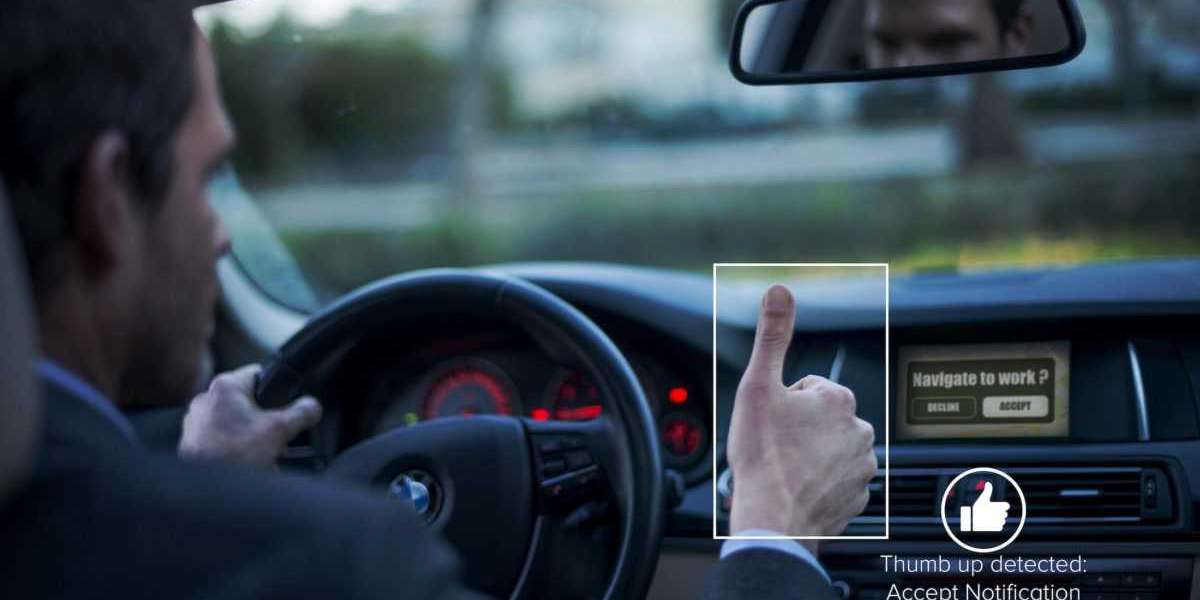
The automotive gesture recognition market is an emerging segment of the in-vehicle human–machine interface landscape, focused on systems that allow drivers and passengers to control vehicle functions using hand or body gestures. These systems use sensors, cameras, radar, or infrared technologies combined with software algorithms to interpret gestures and translate them into commands. Common applications include controlling infotainment systems, navigation, audio volume, climate settings, and accepting or rejecting calls without physical contact.
As vehicles become more connected, intelligent, and software-driven, automakers are prioritizing intuitive and distraction-free interaction methods. Gesture recognition enhances driving safety by reducing the need for physical buttons and touchscreens, allowing drivers to keep their eyes on the road. Growing emphasis on user experience, advanced driver assistance systems, and premium vehicle features is driving steady growth in the global automotive gesture recognition market.
Market Drivers
One of the primary drivers of the automotive gesture recognition market is the increasing focus on driver safety and reduced distraction. Traditional touchscreens and manual controls can divert driver attention, increasing accident risk. Gesture-based controls enable hands-free operation of key vehicle functions, supporting safer driving behavior and compliance with evolving safety guidelines.
Rising adoption of advanced driver assistance systems and connected vehicle technologies also supports market growth. Gesture recognition systems integrate seamlessly with infotainment platforms, voice assistants, and vehicle control units. As vehicles evolve into digital mobility platforms, gesture recognition is becoming a complementary interface alongside voice and touch-based systems.
Growing demand for premium and differentiated in-cabin experiences is another major driver. Automakers increasingly use gesture recognition as a value-added feature in mid-range and luxury vehicles to enhance brand perception and user experience. Consumers are showing higher acceptance of smart interaction technologies, particularly in technologically advanced vehicle segments.
Market Challenges
Despite strong potential, the automotive gesture recognition market faces several challenges. High system cost is a key concern, especially for camera- and radar-based gesture recognition solutions. Advanced sensors, processing units, and software development increase vehicle cost, limiting adoption in entry-level models.
Accuracy and reliability issues also present challenges. Gesture recognition systems must function effectively across different lighting conditions, hand sizes, user behaviors, and driving environments. False detections or delayed responses can frustrate users and reduce system credibility.
User learning curve and acceptance further impact market growth. Not all drivers are immediately comfortable with gesture-based controls, and inconsistent gesture standards across manufacturers can create confusion. Ensuring intuitive design and minimal learning effort is critical for widespread adoption.
Market Opportunities
Technological advancements present strong opportunities for the automotive gesture recognition market. Improvements in artificial intelligence, machine learning, and sensor fusion are enhancing gesture detection accuracy and responsiveness. Combining camera, radar, and infrared inputs enables more reliable recognition across diverse conditions.
Integration with autonomous and semi-autonomous driving features offers another major opportunity. As vehicles assume more driving functions, occupants are likely to interact more with infotainment and comfort systems. Gesture recognition can provide a natural and seamless interaction method in autonomous vehicle environments.
Expansion into mass-market vehicles also creates growth potential. As sensor and processing costs decline, gesture recognition systems are expected to move beyond premium segments into mid-range vehicles. Simplified and software-based solutions can accelerate adoption across broader vehicle categories.
Regional Insights
Europe holds a significant share of the automotive gesture recognition market due to strong adoption of advanced in-vehicle technologies and presence of premium automotive brands. Emphasis on safety, innovation, and user experience supports early adoption of gesture-based interfaces.
North America represents an important market driven by consumer demand for advanced infotainment and connected vehicle features. Technology-focused consumers and strong integration of digital ecosystems encourage adoption of gesture recognition systems in passenger vehicles.
Asia-Pacific is expected to witness the fastest growth due to expanding automotive production, rising disposable incomes, and increasing demand for smart vehicle features. Markets with strong electronics manufacturing and innovation ecosystems support rapid development and deployment of gesture recognition technologies.
Future Outlook
The future of the automotive gesture recognition market is closely linked to advancements in vehicle automation, digital interfaces, and artificial intelligence. Gesture recognition systems are expected to become more accurate, personalized, and context-aware, adapting to individual user behavior and preferences.
As vehicles transition toward software-defined platforms, gesture recognition will be integrated more deeply with voice control, eye tracking, and haptic feedback systems. This multimodal interaction approach will enhance safety, comfort, and overall user experience. Long-term market growth will be supported by continuous innovation, declining technology costs, and rising consumer acceptance.
Conclusion
The automotive gesture recognition market is reshaping the way drivers and passengers interact with vehicles by offering intuitive, hands-free control of in-car functions. Driven by safety concerns, digitalization of vehicle interiors, and demand for premium user experiences, the market is expanding steadily worldwide. While challenges related to cost, accuracy, and user adoption remain, opportunities in artificial intelligence, autonomous driving, and mass-market integration are strengthening long-term prospects. As vehicles become smarter and more interactive, gesture recognition will play an increasingly important role in defining the future of in-vehicle human–machine interaction.