
Introduction
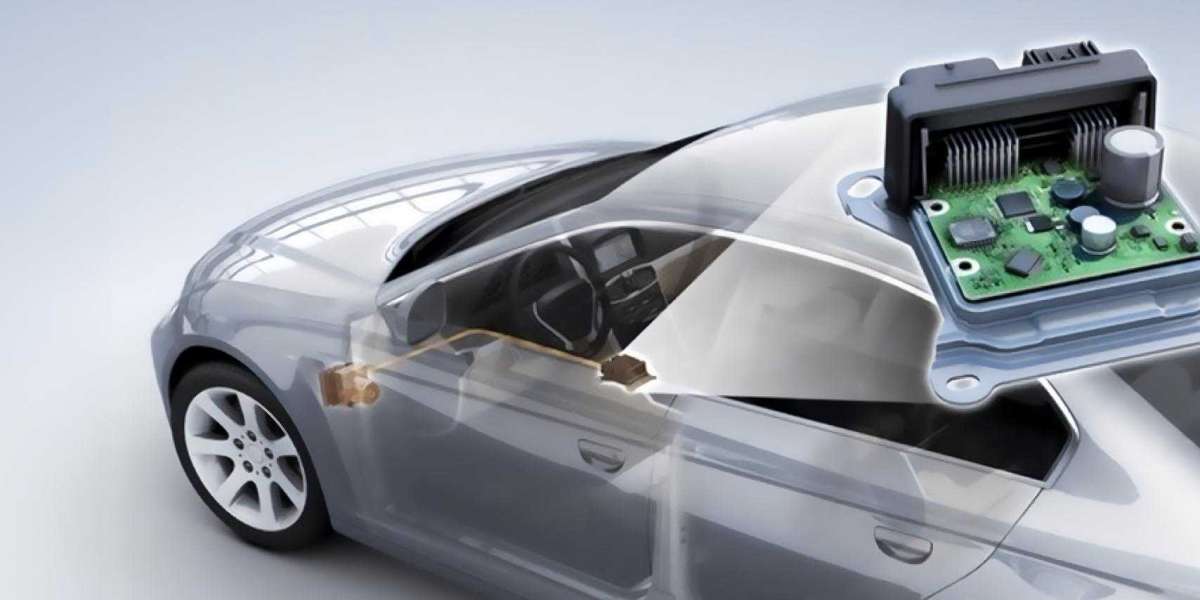
The automotive electronic control unit (ECUs) market is a central segment of the vehicle electronics and control systems industry, focused on embedded computing units that manage and optimize various vehicle functions. ECUs are responsible for controlling powertrain operations, braking and steering systems, body electronics, infotainment, safety features, and advanced driver assistance systems. Modern vehicles can contain dozens of ECUs working together to ensure performance, safety, efficiency, and user comfort.
As vehicles evolve into software-defined and highly connected platforms, the role of ECUs has expanded significantly. Increasing electrification, automation, and connectivity are driving demand for more powerful, reliable, and integrated control units. Automakers are investing heavily in ECU architecture modernization to support advanced functionalities, making the global automotive ECUs market a key growth area within the automotive electronics landscape.
Market Drivers
One of the primary drivers of the automotive ECUs market is the growing integration of advanced driver assistance systems and safety technologies. Features such as adaptive cruise control, lane-keeping assistance, collision avoidance, and electronic stability control rely on multiple ECUs to process sensor data and execute real-time decisions. As safety regulations and consumer expectations increase, ECU demand continues to rise.
Vehicle electrification is another major driver. Electric and hybrid vehicles require sophisticated ECUs to manage battery systems, power electronics, motor control, thermal management, and energy optimization. Compared to conventional vehicles, electric powertrains significantly increase the number and complexity of control units, supporting strong market growth.
Rising consumer demand for connected and intelligent vehicles also supports ECU adoption. Infotainment, telematics, over-the-air updates, and vehicle-to-everything communication require advanced ECUs with high processing power and connectivity capabilities. These trends are pushing automakers toward next-generation control architectures.
Market Challenges
Despite strong growth, the automotive ECUs market faces several challenges. System complexity is a major concern, as vehicles with numerous ECUs require extensive wiring, software integration, and validation. This increases vehicle weight, cost, and development time, prompting automakers to rethink traditional distributed ECU architectures.
Cybersecurity and software reliability issues also pose significant challenges. As ECUs become more connected, they are vulnerable to cyber threats and software bugs. Ensuring secure communication, robust software updates, and compliance with cybersecurity regulations adds complexity and cost to ECU development.
Supply chain constraints present additional challenges. Shortages of semiconductors and electronic components can disrupt ECU production and vehicle manufacturing. Managing supply chain resilience has become a critical priority for ECU suppliers and automakers.
Market Opportunities
Technological innovation presents significant opportunities for the automotive ECUs market. The transition toward centralized and domain-based ECU architectures is gaining momentum. Instead of numerous standalone ECUs, vehicles are moving toward fewer, more powerful control units that manage multiple functions, reducing complexity and cost.
The rise of software-defined vehicles offers another major opportunity. ECUs are increasingly designed as upgradable platforms that support over-the-air updates and feature enhancements. This enables continuous improvement of vehicle functionality and creates new revenue models for automakers and suppliers.
Emerging markets also represent strong long-term growth potential. Increasing vehicle production, rising adoption of electronic features, and growing demand for safer and more efficient vehicles in developing regions are driving ECU demand. Localization of production and cost-optimized solutions will further support market expansion.
Regional Insights
Asia-Pacific holds a leading share of the automotive ECUs market due to high vehicle production volumes and strong electronics manufacturing capabilities. Countries such as China, Japan, and South Korea are major contributors, supported by large automotive OEMs and electronic component suppliers.
Europe represents another significant market, driven by stringent emission and safety regulations and strong adoption of advanced vehicle technologies. Automakers in the region are actively transitioning toward centralized ECU architectures to support electrification and automation.
North America also contributes substantially to the market, supported by demand for connected vehicles, electric vehicle adoption, and innovation in autonomous driving technologies. Strong presence of technology companies and automotive RD centers further supports ECU market growth.
Future Outlook
The future of the automotive ECUs market is closely linked to trends in electrification, automation, and digitalization. ECUs are expected to become more powerful, consolidated, and software-centric, supporting real-time data processing and advanced vehicle intelligence. Increased use of artificial intelligence and high-performance computing will further expand ECU capabilities.
As vehicles transition toward centralized computing platforms, ECU suppliers will focus on scalability, cybersecurity, and software integration. Long-term market growth will be supported by electric vehicle expansion, autonomous driving development, and continuous innovation in vehicle electronics.
Conclusion
The automotive electronic control unit market is a cornerstone of modern vehicle technology, enabling precise control, safety, and intelligence across all vehicle systems. Driven by growth in ADAS, vehicle electrification, and connected mobility, the market continues to expand steadily worldwide. While challenges related to complexity, cybersecurity, and supply chain constraints persist, opportunities in centralized architectures, software-defined vehicles, and emerging markets are strengthening long-term prospects. As vehicles become increasingly intelligent and connected, ECUs will remain at the heart of automotive innovation.