
Introduction
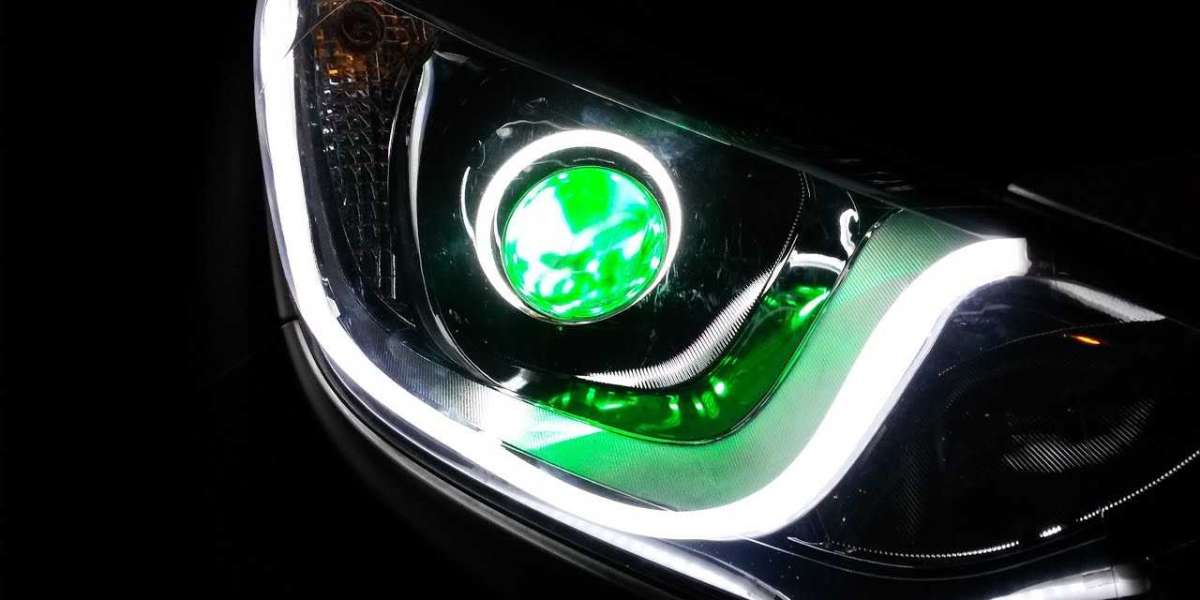
The automotive projector headlamps market is a prominent segment of the vehicle lighting and safety systems industry, focused on advanced headlamp technologies that provide improved illumination, beam control, and road visibility. Projector headlamps use a focused light source, reflector, cutoff shield, and convex lens to project a precisely controlled beam pattern onto the road. Compared to conventional reflector headlamps, projector headlamps offer sharper cutoffs, reduced glare for oncoming traffic, and enhanced nighttime driving safety.
Initially adopted in premium and luxury vehicles, projector headlamps are increasingly penetrating mid-range vehicle segments due to falling component costs and rising safety expectations. They are compatible with halogen, HID, and LED light sources, with LED projectors gaining strong momentum. Growing emphasis on vehicle safety, aesthetics, and regulatory compliance is driving steady growth in the global automotive projector headlamps market.
Market Drivers
One of the primary drivers of the automotive projector headlamps market is increasing focus on road safety and improved nighttime visibility. Poor lighting is a major contributor to road accidents, especially during night driving and adverse weather conditions. Projector headlamps provide a well-defined beam pattern with better illumination range, improving driver confidence and reducing accident risk.
Rising consumer preference for premium vehicle aesthetics is another major driver. Projector headlamps offer a modern and sophisticated appearance that enhances vehicle front-end design. Automakers increasingly use projector headlamps as visual differentiators across trims, boosting their adoption even in non-luxury vehicles.
Advancements in lighting technology also support market growth. The transition from halogen and HID to LED projector headlamps has improved energy efficiency, lifespan, and design flexibility. LED projectors consume less power, generate less heat, and support advanced features such as adaptive lighting and automatic high-beam control, driving wider adoption.
Market Challenges
Despite strong growth prospects, the automotive projector headlamps market faces several challenges. Higher cost compared to conventional reflector headlamps remains a key concern, particularly for entry-level vehicles. Projector systems involve more components and precise assembly, increasing manufacturing and replacement costs.
Design and thermal management challenges also affect the market. Advanced projector headlamps, especially LED-based systems, require efficient heat dissipation to ensure consistent performance and long lifespan. Integrating thermal management solutions within compact headlamp housings adds to design complexity.
Regulatory and standardization challenges present additional hurdles. Automotive lighting systems must comply with region-specific regulations governing beam pattern, brightness, and glare. Meeting these requirements across global markets increases development and certification complexity for manufacturers.
Market Opportunities
Technological innovation presents significant opportunities for the automotive projector headlamps market. Development of adaptive and intelligent lighting systems, such as adaptive front lighting and matrix LED projectors, is gaining momentum. These systems adjust beam patterns dynamically based on speed, steering angle, and traffic conditions, enhancing safety and driving comfort.
The rapid growth of electric and autonomous vehicles offers another major opportunity. Electric vehicles emphasize energy-efficient components and advanced digital systems, making LED projector headlamps an ideal choice. Autonomous and semi-autonomous vehicles further increase demand for advanced lighting solutions that support sensors and enhanced visibility.
Emerging markets represent strong long-term growth potential. Increasing vehicle production, rising safety awareness, and growing demand for feature-rich vehicles in developing regions are driving adoption of projector headlamps. Cost-optimized designs and localization of manufacturing will further support market penetration in these regions.
Regional Insights
Asia-Pacific holds a leading share of the automotive projector headlamps market due to high vehicle production volumes and rapid adoption of advanced lighting technologies. Countries such as China, Japan, and South Korea are major contributors, supported by strong automotive manufacturing ecosystems and rising demand for modern vehicle features.
Europe represents another significant market, driven by stringent safety regulations and strong presence of premium automakers. Adoption of advanced projector and adaptive lighting systems is particularly high, as manufacturers focus on safety and design innovation.
North America also contributes substantially to the market, supported by demand for SUVs, luxury vehicles, and advanced driver assistance features. Consumer preference for enhanced safety and styling supports steady adoption of projector headlamps across vehicle segments.
Future Outlook
The future of the automotive projector headlamps market is closely linked to advancements in LED technology, adaptive lighting, and vehicle automation. Projector headlamps are expected to become more intelligent, energy-efficient, and integrated with vehicle sensor systems. Features such as glare-free high beam, adaptive cornering lights, and communication lighting will shape next-generation solutions.
As safety regulations tighten and consumer expectations evolve, projector headlamps are likely to transition from premium options to mainstream features. Long-term market growth will be supported by electric vehicle expansion, technological innovation, and increasing emphasis on road safety and vehicle design.
Conclusion
The automotive projector headlamps market plays a vital role in enhancing vehicle safety, visibility, and aesthetics. Driven by demand for improved nighttime driving performance, premium vehicle design, and advanced lighting technologies, the market continues to expand steadily worldwide. While challenges related to cost, design complexity, and regulatory compliance persist, opportunities in LED technology, adaptive lighting, and emerging markets are strengthening long-term prospects. As vehicles become safer and more intelligent, projector headlamps are expected to remain central to modern automotive lighting systems.